

A Força
Arcanos maiores
Resumo da ARCANI
Normal
Poder, energia, coragem e magnanimidade; também sucesso completo e honra.
Palavras-chave
- poder
- energia
- coragem
- magnanimidade
- sucesso
Invertida
Despotismo e abuso de poder; fraqueza, discórdia, por vezes desgraça.
Palavras-chave
- despotismo
- abuso de poder
- fraqueza
- discórdia
- desgraça
Notas da imagem · Waite
Trechos das descrições das imagens de Waite, não interpretações adicionais da ARCANI.
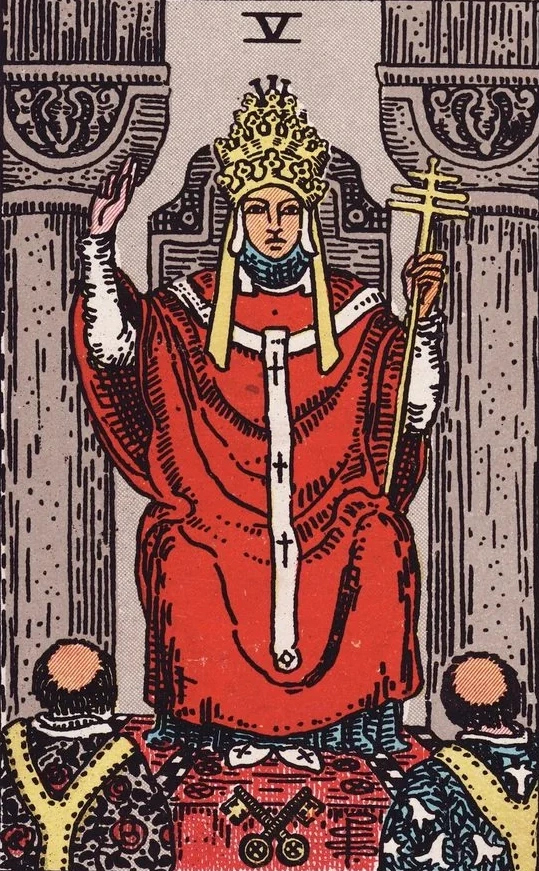
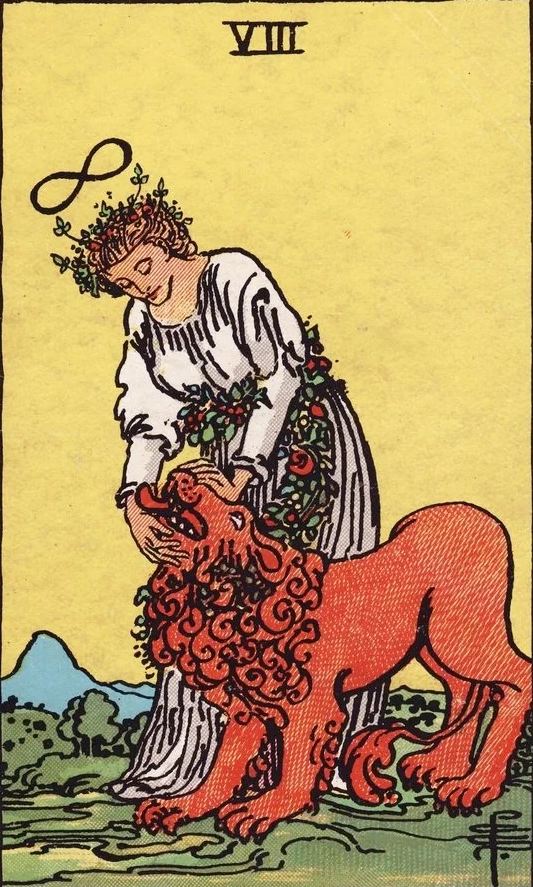
- Uma mulher, sobre cuja cabeça paira o mesmo símbolo da vida que vimos na carta do Hierofante, está fechando as mandíbulas de um leão
- O único ponto em que este desenho difere das apresentações convencionais é que a sua fortaleza benfazeja já subjugou o leão, que é conduzido por uma corrente de flores
- Por razões que me satisfazem, esta carta foi trocada com a da Justiça, que costuma ser numerada como oito
- Como a variação não traz consigo nada que signifique algo para o leitor, não há motivo para explicação
- A fortaleza, num dos seus aspectos mais elevados, está ligada ao Divino Mistério da União
- a virtude, naturalmente, opera em todos os planos e, por isso, recorre a todos no seu simbolismo
- Liga-se também à innocentia inviolata e à força que reside na contemplação
- Estes significados mais elevados são, no entanto, matéria de inferência, e não sugiro que sejam transparentes na superfície da carta
- São insinuados de forma velada pela corrente de flores, que significa, entre muitas outras coisas, o jugo suave e o fardo leve da Lei Divina, quando esta foi acolhida no íntimo dos íntimos
- A carta nada tem a ver com a autoconfiança no sentido comum, embora isso tenha sido sugerido, mas diz respeito à confiança daqueles cuja força é Deus, que nele encontraram o seu refúgio
- Há um aspecto em que o leão significa as paixões, e aquela que se chama Força é a natureza superior na sua libertação
- Pisou o áspide e o basilisco e calcou aos pés o leão e o dragão
Descrição da imagem por Waite
A woman, over whose head there broods the same symbol of life which we have seen in the card of the Hierophant, is closing the jaws of a lion. The only point in which this design differs from the conventional presentations is that her beneficent fortitude has already subdued the lion, which is being led by a chain of flowers. For reasons which satisfy myself, this card has been interchanged with that of Justice, which is usually numbered eight. As the variation carries nothing with it which will signify to the reader, there is no cause for explanation. Fortitude, in one of its most exalted aspects, is connected with the Divine Mystery of Union; the virtue, of course, operates in all planes, and hence draws on all in its symbolism. It connects also with innocentia inviolata, and with the strength which resides in contemplation. These higher meanings are, however, matters of inference, and I do not suggest that they are transparent on the surface of the card. They are intimated in a concealed manner by the chain of flowers, which signifies, among many other things, the sweet yoke and the light burden of Divine Law, when it has been taken into the heart of hearts. The card has nothing to do with self-confidence in the ordinary sense, though this has been suggested—but it concerns the confidence of those whose strength is God, who have found their refuge in Him. There is one aspect in which the lion signifies the passions, and she who is called Strength is the higher nature in its liberation. It has walked upon the asp and the basilisk and has trodden down the lion and the dragon.