


A Imperatriz
Arcanos maiores
Resumo da ARCANI
Normal
Fecundidade, ação e longevidade; também dificuldade, dúvida e ignorância.
Palavras-chave
- fecundidade
- ação
- iniciativa
- dificuldade
- dúvida
- ignorância
Invertida
Verdade e o desvendar de assuntos complicados; ou, por outra leitura, vacilação.
Palavras-chave
- verdade
- desvendamento
- regozijo público
- vacilação
Notas da imagem · Waite
Trechos das descrições das imagens de Waite, não interpretações adicionais da ARCANI.
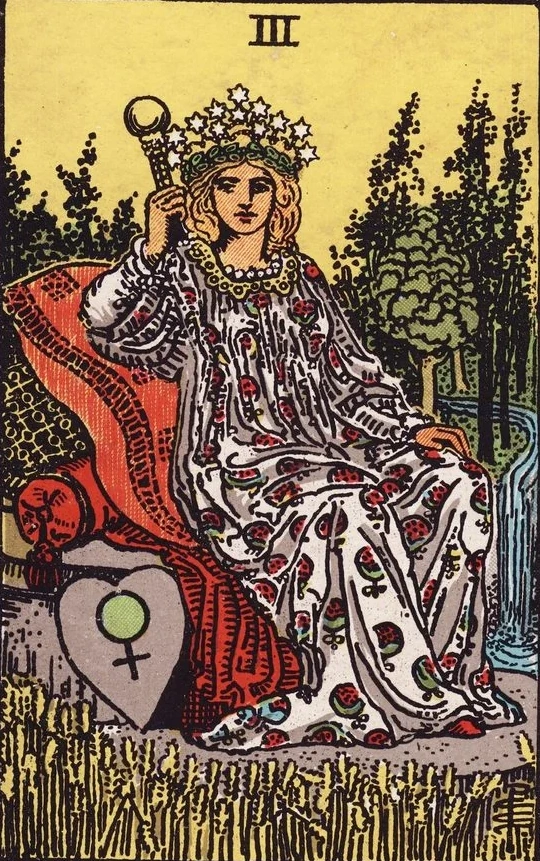
- Uma figura imponente, sentada, com vestes ricas e aspecto real, como de uma filha do céu e da terra
- O seu diadema é de doze estrelas, reunidas num cacho
- O símbolo de Vénus está no escudo que repousa perto dela
- Um campo de trigo amadurece diante dela, e além há uma queda de água
- O cetro que ela porta é encimado pelo globo deste mundo
- Ela é o Jardim do Éden inferior, o Paraíso Terrestre, tudo o que é simbolizado pela casa visível do homem
- Ela não é Regina coeli, mas ainda é refugium peccatorum, a mãe fecunda de milhares
- Há também certos aspectos em que ela foi corretamente descrita como desejo e as suas asas, como a mulher vestida do sol, como Gloria Mundi e o véu do Sanctum Sanctorum
- mas ela não é, posso acrescentar, a alma que alcançou asas, a menos que todo o simbolismo seja contado de outra e incomum maneira
- Ela é acima de tudo fecundidade universal e o sentido externo da Palavra
- Isto é óbvio, porque não há mensagem direta que tenha sido dada ao homem como aquela que é trazida pela mulher
- mas ela própria não carrega a sua interpretação
- Noutra ordem de ideias, a carta da Imperatriz significa a porta ou portão pelo qual se obtém entrada nesta vida, como no Jardim de Vénus
- e então o caminho que leva para fora daí, para o que está além, é o segredo conhecido pela Sacerdotisa: é comunicado por ela aos eleitos
- A maioria das antigas atribuições desta carta está completamente errada quanto ao simbolismo, como, por exemplo, a sua identificação com a Palavra, a Natureza Divina, a Tríade, e assim por diante
Descrição da imagem por Waite
A stately figure, seated, having rich vestments and royal aspect, as of a daughter of heaven and earth. Her diadem is of twelve stars, gathered in a cluster. The symbol of Venus is on the shield which rests near her. A field of corn is ripening in front of her, and beyond there is a fall of water. The sceptre which she bears is surmounted by the globe of this world. She is the inferior Garden of Eden, the Earthly Paradise, all that is symbolized by the visible house of man. She is not Regina coeli, but she is still refugium peccatorum, the fruitful mother of thousands. There are also certain aspects in which she has been correctly described as desire and the wings thereof, as the woman clothed with the sun, as Gloria Mundi and the veil of the Sanctum Sanctorum; but she is not, I may add, the soul that has attained wings, unless all the symbolism is counted up another and unusual way. She is above all things universal fecundity and the outer sense of the Word. This is obvious, because there is no direct message which has been given to man like that which is borne by woman; but she does not herself carry its interpretation. In another order of ideas, the card of the Empress signifies the door or gate by which an entrance is obtained into this life, as into the Garden of Venus; and then the way which leads out therefrom, into that which is beyond, is the secret known to the High Priestess: it is communicated by her to the elect. Most old attributions of this card are completely wrong on the symbolism—as, for example, its identification with the Word, Divine Nature, the Triad, and so forth.