

A Torre
Arcanos maiores
Resumo da ARCANI
Normal
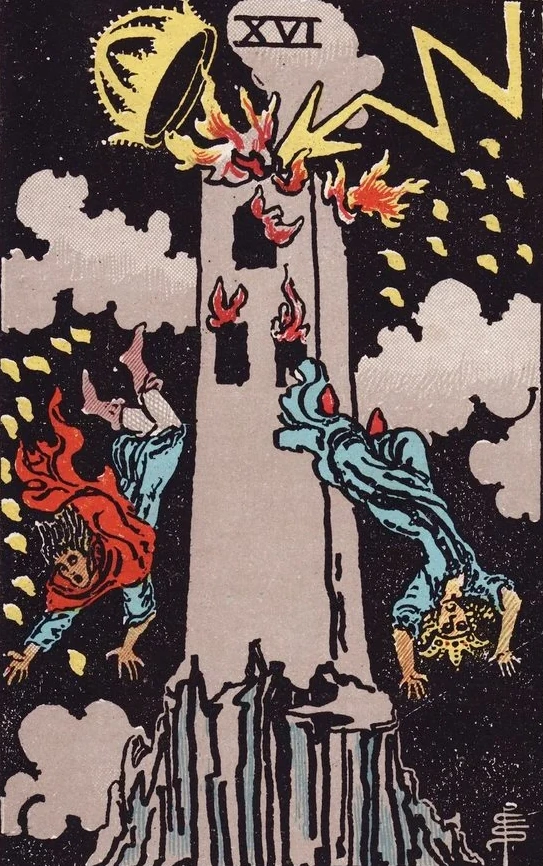
Miséria, aflição, adversidade, calamidade, desgraça, engano e ruína; catástrofe imprevista.
Palavras-chave
- miséria
- aflição
- calamidade
- desgraça
- engano
- ruína
Invertida
Segundo uma leitura, o mesmo em menor grau; também opressão, prisão e tirania.
Palavras-chave
- opressão
- prisão
- tirania
- calamidade atenuada
Notas da imagem · Waite
Trechos das descrições das imagens de Waite, não interpretações adicionais da ARCANI.
- As explicações ocultas ligadas a esta carta são escassas e, na sua maioria, desconcertantes
- É inútil indicar que ela representa a ruína em todos os seus aspectos, pois traz essa evidência à superfície
- Diz-se ainda que contém a primeira alusão a um edifício material, mas não concebo que a Torre seja mais ou menos material do que os pilares que encontrámos em três casos anteriores
- Não vejo nada que justifique a suposição de Papus de que se trata literalmente da queda de Adão, mas há mais a favor da sua alternativa: que significa a materialização da palavra espiritual
- O bibliógrafo Christian imagina que é a queda da mente, que procura penetrar o mistério de Deus
- Concordo antes com o Grande Oriente que é a ruína da Casa da Vida, quando o mal nela prevaleceu, e sobretudo que é o despedaçar de uma Casa de Doutrina
- Entendo, porém, que a referência é a uma Casa de Falsidade
- Ilustra também, da forma mais abrangente, a velha verdade de que "se o Senhor não edificar a casa, em vão trabalham os que a edificam". Há um sentido em que a catástrofe é um reflexo da carta anterior, mas não pelo lado do simbolismo que tentei indicar nela
- Trata-se, mais corretamente, de uma questão de analogia
- num caso está em causa a queda no estado material e animal, enquanto o outro significa destruição no plano intelectual
- A Torre foi descrita como o castigo do orgulho e do intelecto subjugado na tentativa de penetrar o Mistério de Deus
- mas em nenhum dos casos estas explicações dão conta das duas pessoas que são os sofredores vivos
- Uma é a palavra literal tornada vã e a outra a sua falsa interpretação
- Num sentido ainda mais profundo, pode significar também o fim de uma dispensação, mas não há aqui possibilidade de considerar esta questão complexa
Descrição da imagem por Waite
Occult explanations attached to this card are meagre and mostly disconcerting. It is idle to indicate that it depicts ruin in all its aspects, because it bears this evidence on the surface. It is said further that it contains the first allusion to a material building, but I do not conceive that the Tower is more or less material than the pillars which we have met with in three previous cases. I see nothing to warrant Papus in supposing that it is literally the fall of Adam, but there is more in favour of his alternative—that it signifies the materialization of the spiritual word. The bibliographer Christian imagines that it is the downfall of the mind, seeking to penetrate the mystery of God. I agree rather with Grand Orient that it is the ruin of the House of Life, when evil has prevailed therein, and above all that it is the rending of a House of Doctrine. I understand that the reference is, however, to a House of Falsehood. It illustrates also in the most comprehensive way the old truth that "except the Lord build the house, they labour in vain that build it." There is a sense in which the catastrophe is a reflection from the previous card, but not on the side of the symbolism which I have tried to indicate therein. It is more correctly a question of analogy; one is concerned with the fall into the material and animal state, while the other signifies destruction on the intellectual side. The Tower has been spoken of as the chastisement of pride and the intellect overwhelmed in the attempt to penetrate the Mystery of God; but in neither case do these explanations account for the two persons who are the living sufferers. The one is the literal word made void and the other its false interpretation. In yet a deeper sense, it may signify also the end of a dispensation, but there is no possibility here for the consideration of this involved question.