
Os Enamorados
Arcanos maiores
Resumo da ARCANI
Normal
Atração, amor e beleza; provações superadas.
Palavras-chave
- atração
- amor
- beleza
- provações superadas
Invertida
Fracasso e planos tolos; ou, por outra conta, casamento frustrado.
Palavras-chave
- fracasso
- planos tolos
- casamento frustrado
- contrariedade
Notas da imagem · Waite
Trechos das descrições das imagens de Waite, não interpretações adicionais da ARCANI.
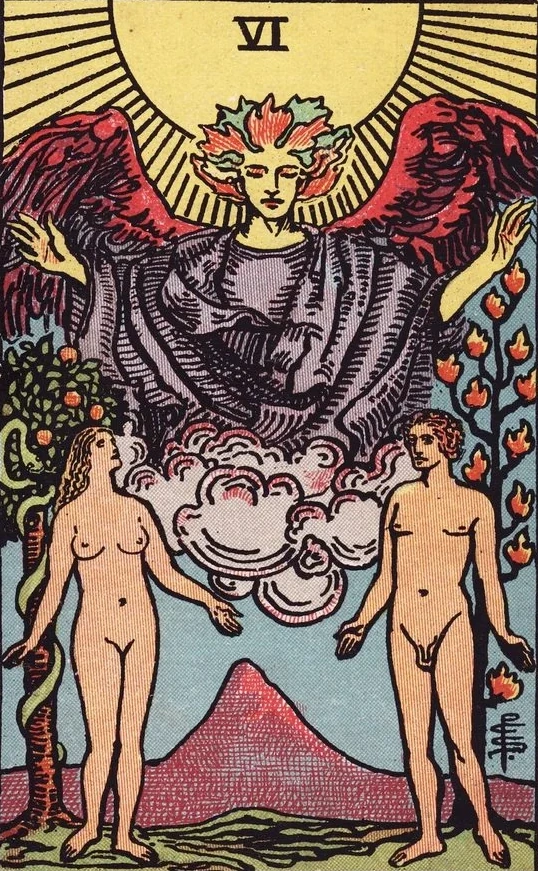
- O sol brilha no zénite, e abaixo está uma grande figura alada com os braços estendidos, derramando influências
- Em primeiro plano estão duas figuras humanas, masculina e feminina, desveladas uma diante da outra, como Adão e Eva quando ocuparam pela primeira vez o paraíso do corpo terrestre
- Atrás do homem está a Árvore da Vida, com doze frutos, e a Árvore do Conhecimento do Bem e do Mal está atrás da mulher
- a serpente enrosca-se nela
- As figuras sugerem juventude, virgindade, inocência e amor antes de ser contaminado pelo desejo material grosseiro
- Esta é, com toda a simplicidade, a carta do amor humano, aqui exibida como parte do caminho, da verdade e da vida
- Ela substitui, recorrendo aos primeiros princípios, a antiga carta do casamento, que descrevi anteriormente, e as tolices posteriores que retratavam o homem entre o vício e a virtude
- Num sentido muito elevado, a carta é um mistério da Aliança e do Sábado
- A sugestão a respeito da mulher é que ela significa aquela atração pela vida sensitiva que carrega em si a ideia da Queda do Homem, mas ela é antes a operação de uma Lei Secreta da Providência do que uma tentadora voluntária e consciente
- É através da sua queda imputada que o homem se erguerá finalmente, e só por ela ele pode completar-se
- A carta é, portanto, à sua maneira, outra indicação sobre o grande mistério da feminilidade
- Os antigos significados desfazem-se necessariamente com as antigas imagens, mas mesmo como interpretações destas, alguns deles eram da ordem do lugar-comum e outros eram falsos no simbolismo
Descrição da imagem por Waite
The sun shines in the zenith, and beneath is a great winged figure with arms extended, pouring down influences. In the foreground are two human figures, male and female, unveiled before each other, as if Adam and Eve when they first occupied the paradise of the earthly body. Behind the man is the Tree of Life, bearing twelve fruits, and the Tree of the Knowledge of Good and Evil is behind the woman; the serpent is twining round it. The figures suggest youth, virginity, innocence and love before it is contaminated by gross material desire. This is in all simplicity the card of human love, here exhibited as part of the way, the truth and the life. It replaces, by recourse to first principles, the old card of marriage, which I have described previously, and the later follies which depicted man between vice and virtue. In a very high sense, the card is a mystery of the Covenant and Sabbath. The suggestion in respect of the woman is that she signifies that attraction towards the sensitive life which carries within it the idea of the Fall of Man, but she is rather the working of a Secret Law of Providence than a willing and conscious temptress. It is through her imputed lapse that man shall arise ultimately, and only by her can he complete himself. The card is therefore in its way another intimation concerning the great mystery of womanhood. The old meanings fall to pieces of necessity with the old pictures, but even as interpretations of the latter, some of them were of the order of commonplace and others were false in symbolism.