





Il Carro
Arcani maggiori
Sintesi ARCANI
Al diritto
Soccorso e provvidenza; anche guerra, trionfo, presunzione, vendetta e turbamento.
Parole chiave
- soccorso
- provvidenza
- guerra
- trionfo
- presunzione
- turbamento
Capovolta
Disordine, lite, disputa, causa legale e sconfitta.
Parole chiave
- disordine
- lite
- disputa
- causa legale
- sconfitta
Note sull’immagine · Waite
Estratti dalle descrizioni delle immagini di Waite, non interpretazioni aggiuntive di ARCANI.
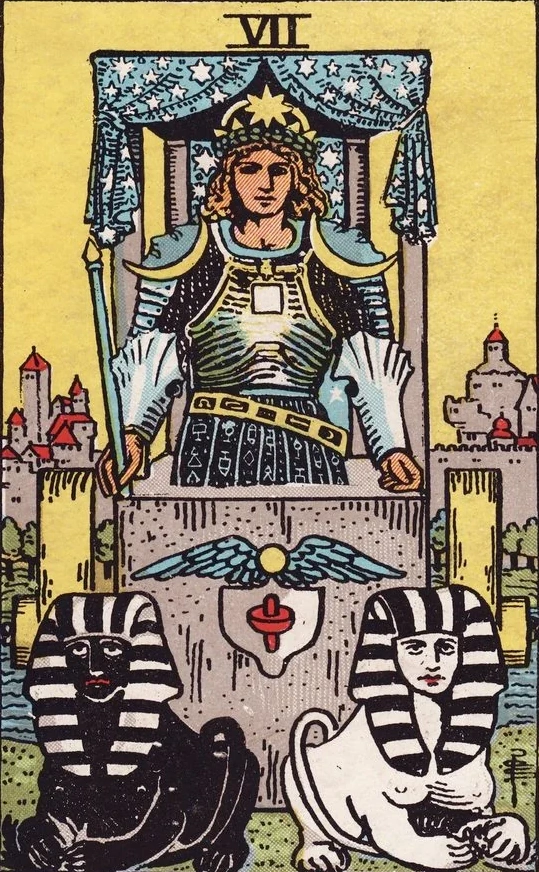
- Una figura eretta e principesca che porta una spada sguainata e corrisponde, in linea generale, alla descrizione tradizionale che ho dato nella prima parte
- Sulle spalle dell’eroe vittorioso si suppone siano l’Urim e il Tummim
- Ha condotto prigioniera la cattività
- è conquista su tutti i piani: nella mente, nella scienza, nel progresso, in certe prove di iniziazione
- Ha così risposto alla sfinge, ed è per questo che ho accettato la variante di Éliphas Lévi
- due sfingi tirano così il suo carro
- È soprattutto trionfo nella mente
- Si deve intendere per questa ragione (a) che la domanda della sfinge riguarda un Mistero della Natura e non del mondo della Grazia, a cui l’auriga non potrebbe dare alcuna risposta
- (b) che i piani della sua conquista sono manifesti o esteriori e non dentro di lui
- (c) che la liberazione che egli opera può lasciarlo nella schiavitù dell’intelletto logico
- (d) che le prove di iniziazione che ha superato in trionfo vanno intese fisicamente o razionalmente
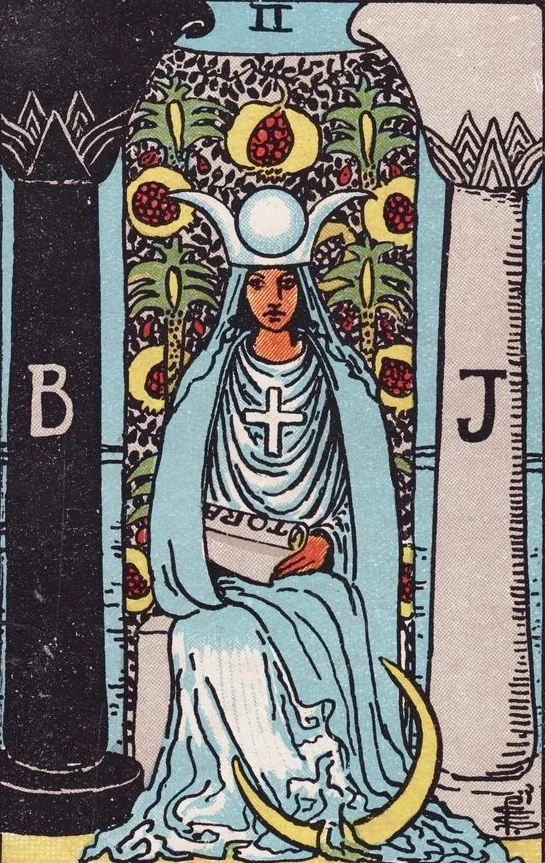
- e (e) che se giungesse alle colonne di quel Tempio tra cui è seduta la Papessa, non potrebbe aprire il rotolo chiamato Tora, né, se ella lo interrogasse, saprebbe rispondere
- Non è regalità ereditaria e non è sacerdozio
Descrizione dell’immagine di Waite
An erect and princely figure carrying a drawn sword and corresponding, broadly speaking, to the traditional description which I have given in the first part. On the shoulders of the victorious hero are supposed to be the Urim and Thummim. He has led captivity captive; he is conquest on all planes—in the mind, in science, in progress, in certain trials of initiation. He has thus replied to the sphinx, and it is on this account that I have accepted the variation of Éliphas Lévi; two sphinxes thus draw his chariot. He is above all things triumph in the mind. It is to be understood for this reason (a) that the question of the sphinx is concerned with a Mystery of Nature and not of the world of Grace, to which the charioteer could offer no answer; (b) that the planes of his conquest are manifest or external and not within himself; (c) that the liberation which he effects may leave himself in the bondage of the logical understanding; (d) that the tests of initiation through which he has passed in triumph are to be understood physically or rationally; and (e) that if he came to the pillars of that Temple between which the High Priestess is seated, he could not open the scroll called Tora, nor if she questioned him could he answer. He is not hereditary royalty and he is not priesthood.