Il Papa
Arcani maggiori
Sintesi ARCANI
Al diritto
Matrimonio, alleanza e servitù; secondo un’altra versione, misericordia, bontà e ispirazione.
Parole chiave
- matrimonio
- alleanza
- cattività
- servitù
- misericordia
- ispirazione
Capovolta
Società, buona intesa e concordia; anche troppa bontà e debolezza.
Parole chiave
- società
- concordia
- troppa bontà
- debolezza
Note sull’immagine · Waite
Estratti dalle descrizioni delle immagini di Waite, non interpretazioni aggiuntive di ARCANI.
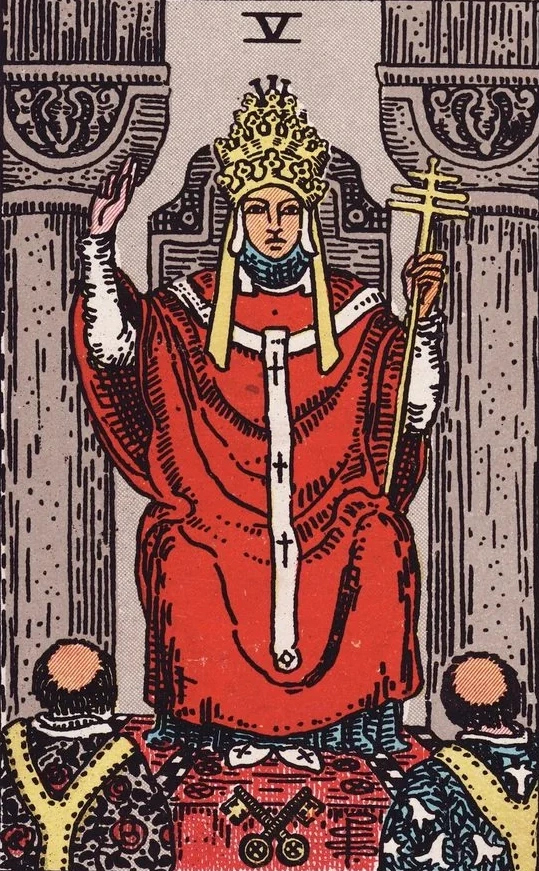
- Porta la triplice corona ed è seduto tra due colonne, ma non sono quelle del Tempio custodito dalla Papessa
- Nella mano sinistra tiene uno scettro che termina nella triplice croce, e con la destra dà il noto segno ecclesiastico chiamato dell’esoterismo, che distingue tra la parte manifesta e quella nascosta della dottrina
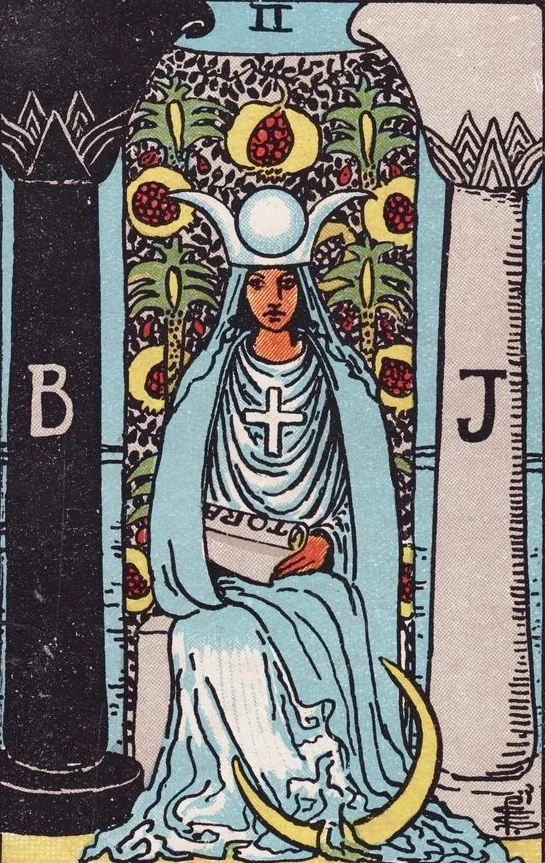
- È notevole, a questo proposito, che la Papessa non faccia alcun segno
- Ai suoi piedi sono le chiavi incrociate, e due ministri sacerdotali in camice gli si inginocchiano davanti
- È stato di solito chiamato il Papa, che è un’applicazione particolare dell’ufficio più generale che egli simboleggia
- È il potere dominante della religione esteriore, come la Papessa è il genio prevalente del potere esoterico e ritirato
- I significati propri di questa carta hanno subito un doloroso miscuglio da quasi tutte le mani
- Il Grande Oriente dice giustamente che il Papa è il potere delle chiavi, la dottrina ortodossa essoterica e il lato esteriore della vita che conduce alla dottrina
- ma certo non è il principe della dottrina occulta, come ha suggerito un altro commentatore
- È piuttosto la summa totius theologiæ, quando è passata nella massima rigidità di espressione
- ma simboleggia anche tutte le cose rette e sacre sul lato manifesto
- Come tale, è il canale della grazia appartenente al mondo dell’istituzione, distinto da quello della Natura, ed è il capo della salvezza per il genere umano in generale
- È l’ordine e il capo della gerarchia riconosciuta, che è il riflesso di un altro e più grande ordine gerarchico
- ma può accadere che il pontefice dimentichi il significato di questo suo stato simbolico e agisca come se contenesse nelle sue proprie misure tutto ciò che il suo segno significa o il suo simbolo cerca di mostrare
- Non è, come si è pensato, la filosofia, se non dal lato teologico
- non è ispirazione
- e non è religione, sebbene sia un modo della sua espressione
Descrizione dell’immagine di Waite
He wears the triple crown and is seated between two pillars, but they are not those of the Temple which is guarded by the High Priestess. In his left hand he holds a sceptre terminating in the triple cross, and with his right hand he gives the well-known ecclesiastical sign which is called that of esotericism, distinguishing between the manifest and concealed part of doctrine. It is noticeable in this connexion that the High Priestess makes no sign. At his feet are the crossed keys, and two priestly ministers in albs kneel before him. He has been usually called the Pope, which is a particular application of the more general office that he symbolizes. He is the ruling power of external religion, as the High Priestess is the prevailing genius of the esoteric, withdrawn power. The proper meanings of this card have suffered woeful admixture from nearly all hands. Grand Orient says truly that the Hierophant is the power of the keys, exoteric orthodox doctrine, and the outer side of the life which leads to the doctrine; but he is certainly not the prince of occult doctrine, as another commentator has suggested. He is rather the summa totius theologiæ, when it has passed into the utmost rigidity of expression; but he symbolizes also all things that are righteous and sacred on the manifest side. As such, he is the channel of grace belonging to the world of institution as distinct from that of Nature, and he is the leader of salvation for the human race at large. He is the order and the head of the recognized hierarchy, which is the reflection of another and greater hierarchic order; but it may so happen that the pontiff forgets the significance of this his symbolic state and acts as if he contained within his proper measures all that his sign signifies or his symbol seeks to shew forth. He is not, as it has been thought, philosophy—except on the theological side; he is not inspiration; and he is not religion, although he is a mode of its expression.