L’Imperatore
Arcani maggiori
Sintesi ARCANI
Al diritto
Stabilità, potere e protezione; ragione, convinzione, autorità e volontà.
Parole chiave
- stabilità
- potere
- protezione
- realizzazione
- ragione
- convinzione
Capovolta
Benevolenza e credito; anche confusione per i nemici, ostruzione e immaturità.
Parole chiave
- benevolenza
- compassione
- ostruzione
- immaturità
Note sull’immagine · Waite
Estratti dalle descrizioni delle immagini di Waite, non interpretazioni aggiuntive di ARCANI.
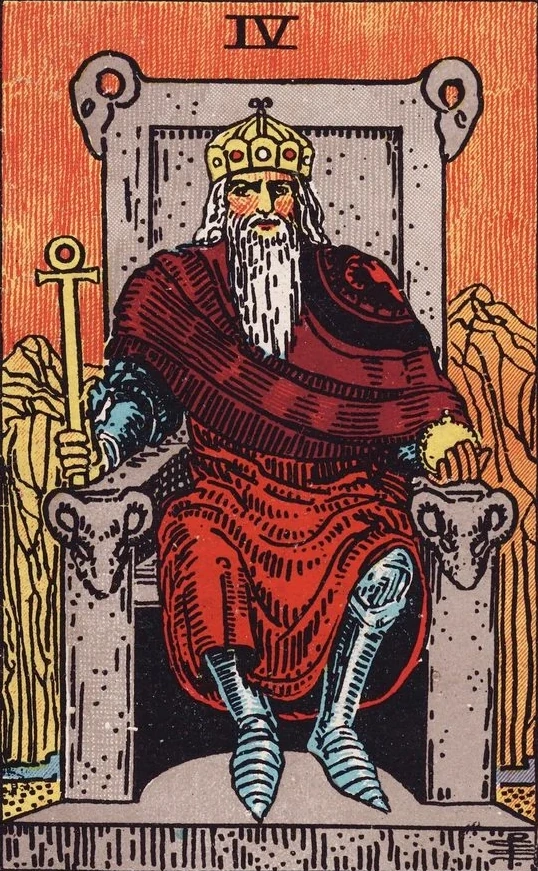
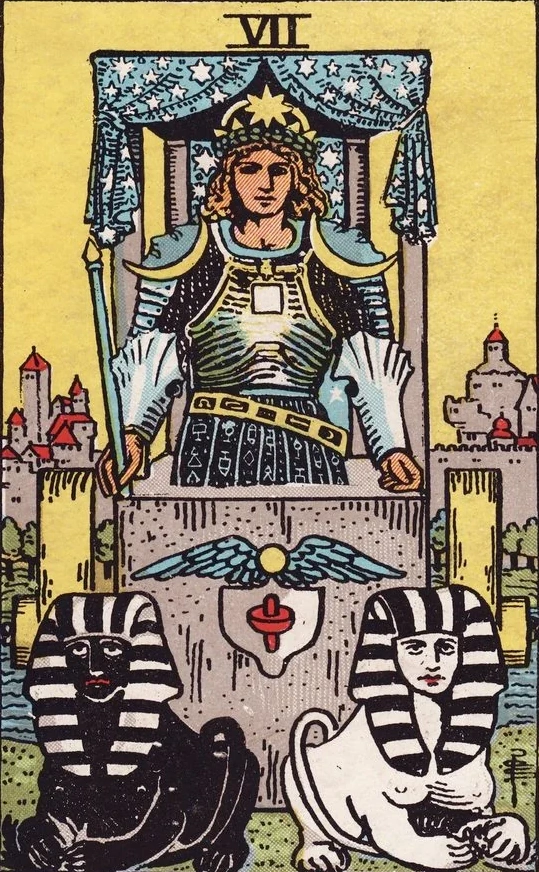
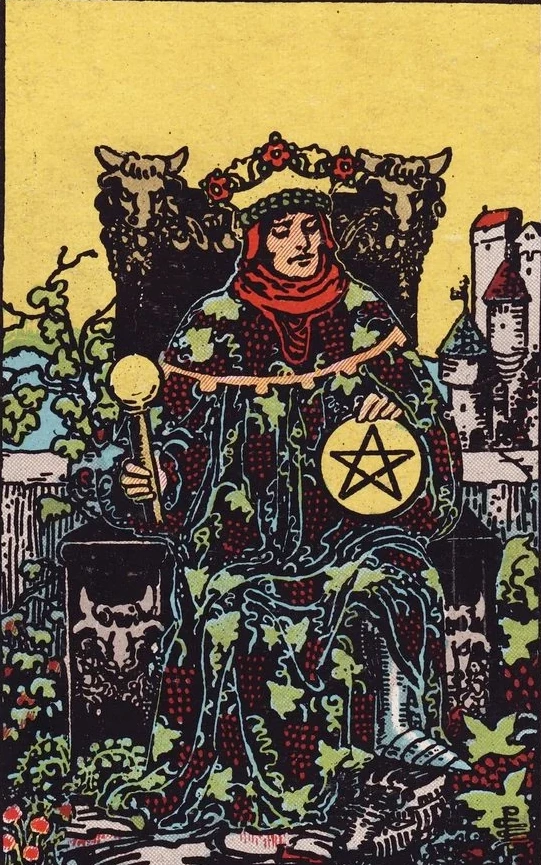
- Ha una forma di Crux ansata per scettro e un globo nella mano sinistra
- È un monarca coronato, imperioso, maestoso, seduto su un trono i cui braccioli sono frontali con teste di ariete
- È esecuzione e realizzazione, il potere di questo mondo, qui rivestito dei più alti suoi attributi naturali
- Talvolta è rappresentato seduto su una pietra cubica, che però confonde alcune delle questioni
- È il potere virile, a cui l’Imperatrice risponde, e in questo senso è colui che cerca di rimuovere il Velo di Iside
- ma ella rimane virgo intacta
- Si deve intendere che questa carta e quella dell’Imperatrice non rappresentano precisamente la condizione della vita coniugale, benché questo stato sia implicito
- In superficie, come ho indicato, stanno per la regalità mondana, elevata sui seggi dei potenti
- ma al di sopra di ciò vi è la suggestione di un’altra presenza
- Significano anche, e la figura maschile in particolare, la regalità superiore, che occupa il trono intellettuale
- Di qui è la signoria del pensiero più che del mondo animale
- Entrambe le personalità, a modo loro, sono «piene di strana esperienza», ma la loro non è coscientemente la saggezza che attinge da un mondo superiore
- L’Imperatore è stato descritto come (a) volontà nella sua forma incarnata, ma questa è solo una delle sue applicazioni, e (b) come espressione di virtualità contenute nell’Essere Assoluto, ma questa è fantasia
Descrizione dell’immagine di Waite
He has a form of the Crux ansata for his sceptre and a globe in his left hand. He is a crowned monarch—commanding, stately, seated on a throne, the arms of which are fronted by rams' heads. He is executive and realization, the power of this world, here clothed with the highest of its natural attributes. He is occasionally represented as seated on a cubic stone, which, however, confuses some of the issues. He is the virile power, to which the Empress responds, and in this sense is he who seeks to remove the Veil of Isis; yet she remains virgo intacta. It should be understood that this card and that of the Empress do not precisely represent the condition of married life, though this state is implied. On the surface, as I have indicated, they stand for mundane royalty, uplifted on the seats of the mighty; but above this there is the suggestion of another presence. They signify also—and the male figure especially—the higher kingship, occupying the intellectual throne. Hereof is the lordship of thought rather than of the animal world. Both personalities, after their own manner, are "full of strange experience," but theirs is not consciously the wisdom which draws from a higher world. The Emperor has been described as (a) will in its embodied form, but this is only one of its applications, and (b) as an expression of virtualities contained in the Absolute Being—but this is fantasy.