
L’Imperatrice
Arcani maggiori
Sintesi ARCANI
Al diritto
Fecondità, azione e lunghezza di giorni; anche difficoltà, dubbio e ignoranza.
Parole chiave
- fecondità
- azione
- iniziativa
- difficoltà
- dubbio
- ignoranza
Capovolta
Verità e chiarimento di questioni intricate; o, in un’altra lettura, vacillamento.
Parole chiave
- verità
- chiarimento
- gioia pubblica
- vacillamento
Note sull’immagine · Waite
Estratti dalle descrizioni delle immagini di Waite, non interpretazioni aggiuntive di ARCANI.
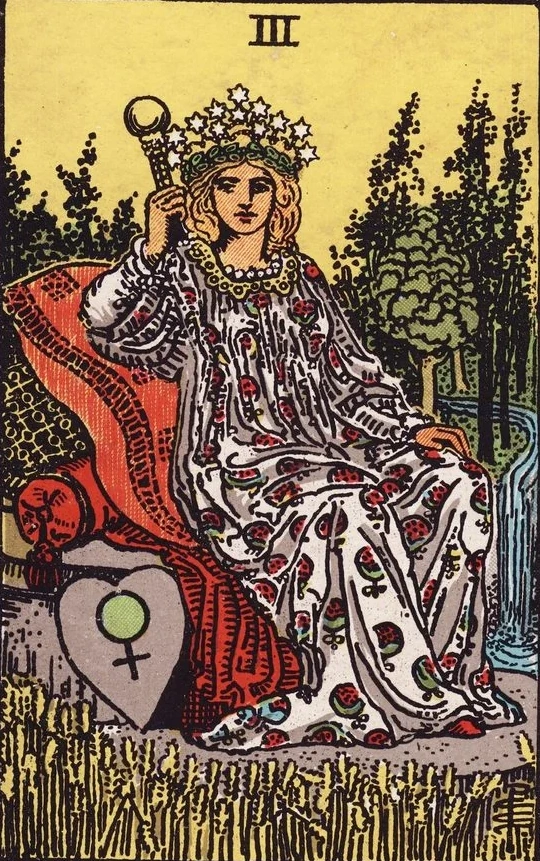
- Una figura maestosa, seduta, con ricche vesti e aspetto regale, come di una figlia del cielo e della terra
- Il suo diadema è di dodici stelle, raccolte in un grappolo
- Il simbolo di Venere è sullo scudo che riposa accanto a lei
- Un campo di grano matura davanti a lei, e oltre vi è una cascata d’acqua
- Lo scettro che porta è sormontato dal globo di questo mondo
- È il Giardino inferiore dell’Eden, il Paradiso terrestre, tutto ciò che è simboleggiato dalla casa visibile dell’uomo
- Non è la Regina coeli, ma è ancora il refugium peccatorum, la madre feconda di migliaia
- Vi sono anche certi aspetti in cui è stata correttamente descritta come il desiderio e le sue ali, come la donna vestita di sole, come Gloria Mundi e il velo del Sanctum Sanctorum
- ma non è, posso aggiungere, l’anima che ha conseguito le ali, a meno che tutto il simbolismo non sia contato in un modo diverso e inusuale
- È soprattutto fecondità universale e senso esteriore della Parola
- Questo è evidente, perché non vi è messaggio diretto dato all’uomo come quello che porta la donna
- ma ella stessa non ne porta l’interpretazione
- In un altro ordine di idee, la carta dell’Imperatrice significa la porta o il varco per cui si ottiene l’ingresso in questa vita, come nel Giardino di Venere
- e poi la via che di là conduce fuori, verso ciò che è oltre, è il segreto noto alla Papessa: è da lei comunicato agli eletti
- La maggior parte delle antiche attribuzioni di questa carta è del tutto errata sul simbolismo, come per esempio la sua identificazione con la Parola, la Natura Divina, la Triade e così via
Descrizione dell’immagine di Waite
A stately figure, seated, having rich vestments and royal aspect, as of a daughter of heaven and earth. Her diadem is of twelve stars, gathered in a cluster. The symbol of Venus is on the shield which rests near her. A field of corn is ripening in front of her, and beyond there is a fall of water. The sceptre which she bears is surmounted by the globe of this world. She is the inferior Garden of Eden, the Earthly Paradise, all that is symbolized by the visible house of man. She is not Regina coeli, but she is still refugium peccatorum, the fruitful mother of thousands. There are also certain aspects in which she has been correctly described as desire and the wings thereof, as the woman clothed with the sun, as Gloria Mundi and the veil of the Sanctum Sanctorum; but she is not, I may add, the soul that has attained wings, unless all the symbolism is counted up another and unusual way. She is above all things universal fecundity and the outer sense of the Word. This is obvious, because there is no direct message which has been given to man like that which is borne by woman; but she does not herself carry its interpretation. In another order of ideas, the card of the Empress signifies the door or gate by which an entrance is obtained into this life, as into the Garden of Venus; and then the way which leads out therefrom, into that which is beyond, is the secret known to the High Priestess: it is communicated by her to the elect. Most old attributions of this card are completely wrong on the symbolism—as, for example, its identification with the Word, Divine Nature, the Triad, and so forth.