La Torre
Arcani maggiori
Sintesi ARCANI
Al diritto
Miseria, angoscia, avversità, calamità, disgrazia, inganno e rovina; catastrofe imprevista.
Parole chiave
- miseria
- angoscia
- calamità
- disgrazia
- inganno
- rovina
Capovolta
Secondo un’altra lettura è lo stesso, ma in grado minore; anche oppressione, prigionia e tirannia.
Parole chiave
- oppressione
- prigionia
- tirannia
- calamità attenuata
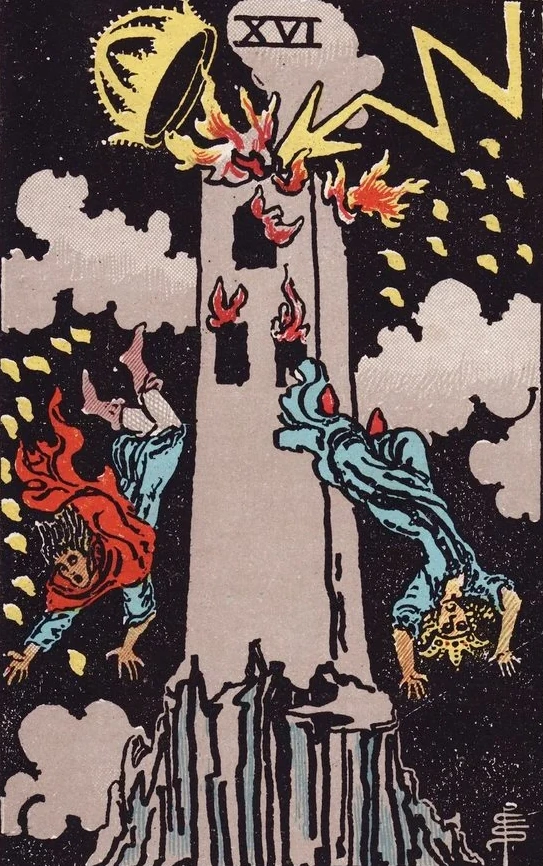
Note sull’immagine · Waite
Estratti dalle descrizioni delle immagini di Waite, non interpretazioni aggiuntive di ARCANI.
- Le spiegazioni occulte legate a questa carta sono scarse e per lo più sconcertanti
- È inutile indicare che raffigura la rovina in tutti i suoi aspetti, perché questa evidenza è in superficie
- Si dice inoltre che contenga il primo accenno a un edificio materiale, ma non concepisco che la Torre sia più o meno materiale delle colonne che abbiamo incontrato in tre casi precedenti
- Non vedo nulla che giustifichi Papus nel supporre che sia letteralmente la caduta di Adamo, ma c’è di più a favore della sua alternativa: che significhi la materializzazione della parola spirituale
- Il bibliografo Christian immagina che sia la rovina della mente che cerca di penetrare il mistero di Dio
- Sono piuttosto d’accordo con il Grand Orient che sia la rovina della Casa della Vita, quando il male vi ha prevalso, e soprattutto che sia lo squarcio di una Casa della Dottrina
- Intendo che il riferimento è, tuttavia, a una Casa della Falsità
- Illustra anche nel modo più completo l’antica verità che «se il Signore non costruisce la casa, invano vi faticano i costruttori». C’è un senso in cui la catastrofe è un riflesso della carta precedente, ma non sul versante del simbolismo che ho cercato di indicare in essa
- Si tratta più correttamente di un’analogia
- l’una riguarda la caduta nello stato materiale e animale, mentre l’altra significa distruzione sul piano intellettuale
- La Torre è stata descritta come il castigo dell’orgoglio e dell’intelletto sopraffatto nel tentativo di penetrare il Mistero di Dio
- ma in nessuno dei due casi queste spiegazioni rendono conto delle due persone che sono i sofferenti vivi
- L’una è la parola letterale resa vana e l’altra la sua falsa interpretazione
- In un senso ancora più profondo, può significare anche la fine di una dispensazione, ma qui non c’è possibilità di considerare questa questione intricata
Descrizione dell’immagine di Waite
Occult explanations attached to this card are meagre and mostly disconcerting. It is idle to indicate that it depicts ruin in all its aspects, because it bears this evidence on the surface. It is said further that it contains the first allusion to a material building, but I do not conceive that the Tower is more or less material than the pillars which we have met with in three previous cases. I see nothing to warrant Papus in supposing that it is literally the fall of Adam, but there is more in favour of his alternative—that it signifies the materialization of the spiritual word. The bibliographer Christian imagines that it is the downfall of the mind, seeking to penetrate the mystery of God. I agree rather with Grand Orient that it is the ruin of the House of Life, when evil has prevailed therein, and above all that it is the rending of a House of Doctrine. I understand that the reference is, however, to a House of Falsehood. It illustrates also in the most comprehensive way the old truth that "except the Lord build the house, they labour in vain that build it." There is a sense in which the catastrophe is a reflection from the previous card, but not on the side of the symbolism which I have tried to indicate therein. It is more correctly a question of analogy; one is concerned with the fall into the material and animal state, while the other signifies destruction on the intellectual side. The Tower has been spoken of as the chastisement of pride and the intellect overwhelmed in the attempt to penetrate the Mystery of God; but in neither case do these explanations account for the two persons who are the living sufferers. The one is the literal word made void and the other its false interpretation. In yet a deeper sense, it may signify also the end of a dispensation, but there is no possibility here for the consideration of this involved question.