Il Diavolo
Arcani maggiori
Sintesi ARCANI
Al diritto
Devastazione, violenza e forza; fatalità, e ciò che è predestinato ma non per questo malvagio.
Parole chiave
- devastazione
- violenza
- forza
- fatalità
- predestinazione
Capovolta
Fatalità malvagia; debolezza, meschinità e cecità.
Parole chiave
- fatalità malvagia
- debolezza
- meschinità
- cecità
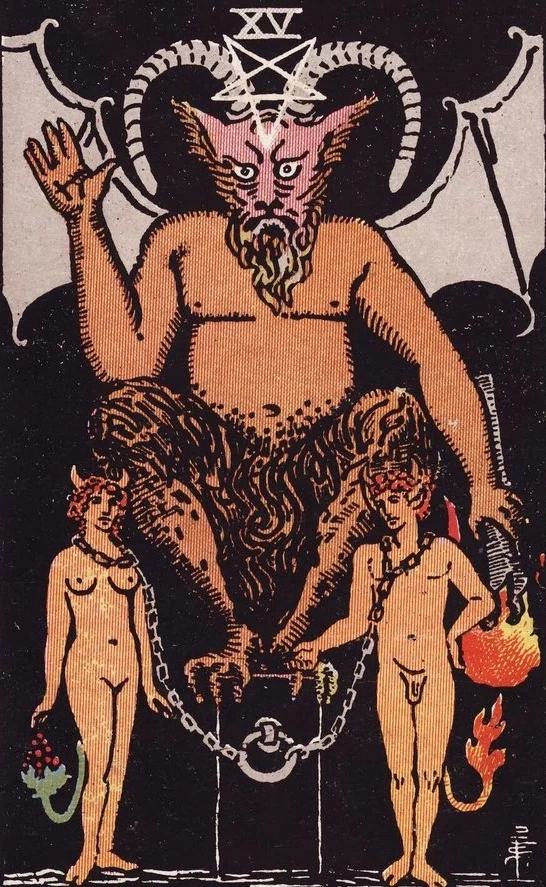
Note sull’immagine · Waite
Estratti dalle descrizioni delle immagini di Waite, non interpretazioni aggiuntive di ARCANI.
- Il disegno è un accomodamento, una via di mezzo o un’armonia, tra diversi motivi menzionati nella prima parte
- Il Capro Cornuto di Mendes, con ali simili a quelle di un pipistrello, sta su un altare
- Alla bocca dello stomaco vi è il segno di Mercurio
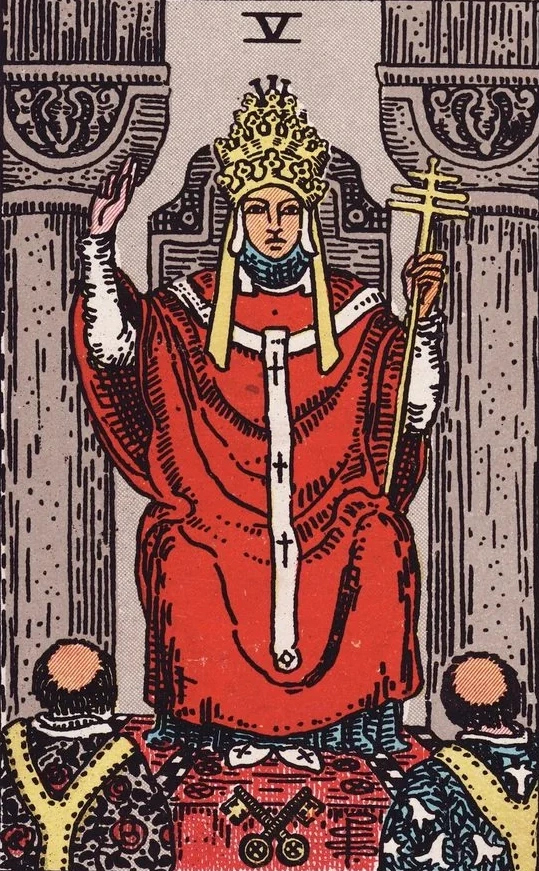
- La mano destra è sollevata e tesa, essendo l’inverso di quella benedizione che è data dal Papa nella quinta carta
- Nella mano sinistra vi è una grande torcia fiammeggiante, rivolta verso la terra
- Sulla fronte vi è un pentagramma rovesciato
- Davanti all’altare vi è un anello, dal quale due catene sono portate al collo di due figure, maschile e femminile
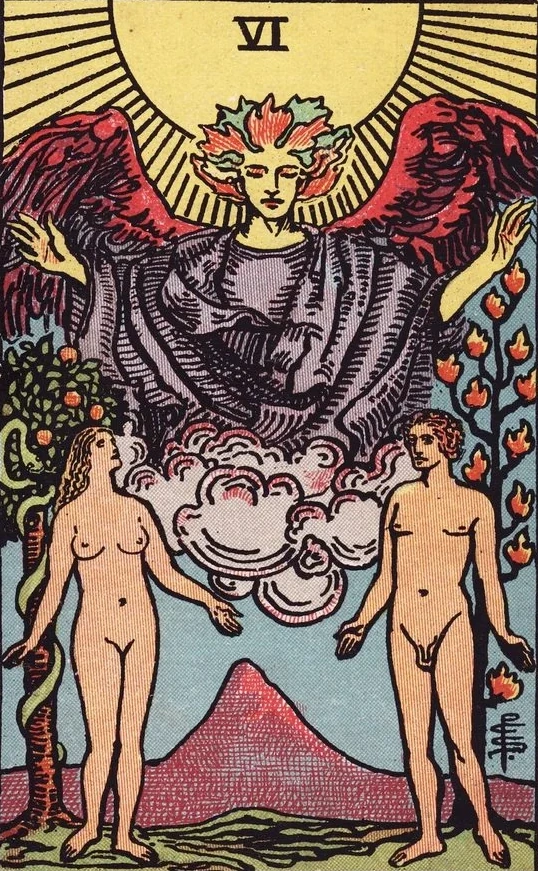
- Queste sono analoghe a quelle della quinta carta, come se fossero Adamo ed Eva dopo la Caduta
- Di questo è la catena e la fatalità della vita materiale
- Le figure hanno la coda, per significare la natura animale, ma nei volti vi è intelligenza umana, e colui che è esaltato sopra di loro non sarà il loro padrone per sempre
- Anche ora egli è un servo, sostenuto dal male che è in lui e cieco alla libertà del servizio
- Con più del suo solito disprezzo per le arti che pretendeva di rispettare e interpretare da maestro, Éliphas Lévi afferma che la figura bafometica è scienza occulta e magia
- Un altro commentatore dice che nel mondo Divino essa significa predestinazione, ma in quel mondo non vi è corrispondenza con le cose che in basso sono della bestia
- Ciò che essa significa è l’Abitante della Soglia fuori dal Giardino Mistico, quando ne sono scacciati coloro che hanno mangiato il frutto proibito
Descrizione dell’immagine di Waite
The design is an accommodation, mean or harmony, between several motives mentioned in the first part. The Horned Goat of Mendes, with wings like those of a bat, is standing on an altar. At the pit of the stomach there is the sign of Mercury. The right hand is upraised and extended, being the reverse of that benediction which is given by the Hierophant in the fifth card. In the left hand there is a great flaming torch, inverted towards the earth. A reversed pentagram is on the forehead. There is a ring in front of the altar, from which two chains are carried to the necks of two figures, male and female. These are analogous with those of the fifth card, as if Adam and Eve after the Fall. Hereof is the chain and fatality of the material life. The figures are tailed, to signify the animal nature, but there is human intelligence in the faces, and he who is exalted above them is not to be their master for ever. Even now, he is also a bondsman, sustained by the evil that is in him and blind to the liberty of service. With more than his usual derision for the arts which he pretended to respect and interpret as a master therein, Éliphas Lévi affirms that the Baphometic figure is occult science and magic. Another commentator says that in the Divine world it signifies predestination, but there is no correspondence in that world with the things which below are of the brute. What it does signify is the Dweller on the Threshold without the Mystical Garden when those are driven forth therefrom who have eaten the forbidden fruit.