La Ruota della Fortuna
Arcani maggiori
Sintesi ARCANI
Al diritto
Destino e fortuna: successo, elevazione, sorte e felicità.
Parole chiave
- destino
- fortuna
- successo
- elevazione
- sorte
- felicità
Capovolta
Aumento, abbondanza e superfluità.
Parole chiave
- aumento
- abbondanza
- superfluità
Note sull’immagine · Waite
Estratti dalle descrizioni delle immagini di Waite, non interpretazioni aggiuntive di ARCANI.
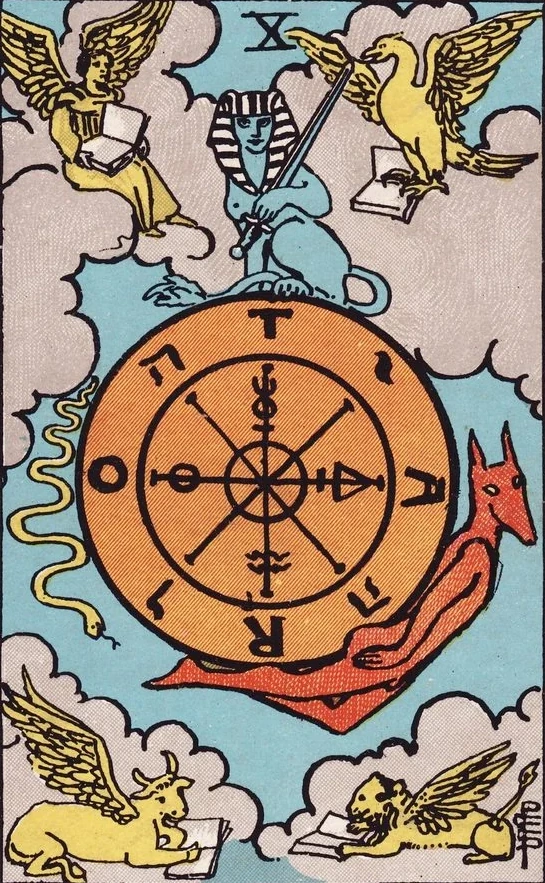
- In questo simbolo ho seguito ancora la ricostruzione di Éliphas Lévi, che ne ha fornito diverse varianti
- È legittimo, come ho accennato, usare il simbolismo egizio quando questo serve al nostro scopo, purché non vi si sottintenda alcuna teoria sull’origine
- Ho però presentato Tifone nella sua forma serpentina
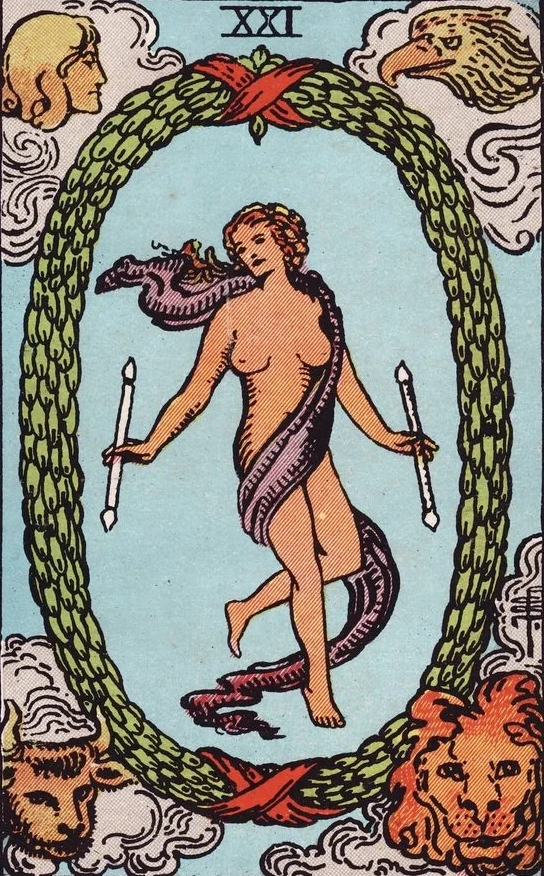
- Il simbolismo, naturalmente, non è esclusivamente egizio, poiché le quattro Creature Viventi di Ezechiele occupano gli angoli della carta, e la ruota stessa segue altre indicazioni di Lévi riguardo alla visione di Ezechiele, come illustrazione della particolare Chiave dei Tarocchi
- Con l’occultista francese, e nel disegno stesso, l’immagine simbolica rappresenta il moto perpetuo di un universo fluido e il flusso della vita umana
- La Sfinge è l’equilibrio in esso
- La traslitterazione di Taro come Rota è incisa sulla ruota, scambiata con le lettere del Nome Divino, per mostrare che la Provvidenza è implicata in tutto
- Ma questa è l’intenzione divina all’interno, e la simile intenzione all’esterno è esemplificata dalle quattro Creature Viventi
- Talvolta la sfinge è rappresentata accovacciata su un piedistallo soprastante, il che froda il simbolismo rendendo vana l’idea essenziale di stabilità nel movimento
- Dietro la nozione generale espressa nel simbolo si cela la negazione del caso e la fatalità che in esso è implicita
- Si può aggiungere che, dai tempi di Lévi in poi, le spiegazioni occulte di questa carta sono, anche per l’occultismo stesso, di una specie singolarmente sciocca
- Le è stato attribuito il significato di principio, fecondità, onore virile, autorità dominante, ecc
- I risultati della comune cartomanzia sono migliori di questo sul loro stesso piano
Descrizione dell’immagine di Waite
In this symbol I have again followed the reconstruction of Éliphas Lévi, who has furnished several variants. It is legitimate—as I have intimated—to use Egyptian symbolism when this serves our purpose, provided that no theory of origin is implied therein. I have, however, presented Typhon in his serpent form. The symbolism is, of course, not exclusively Egyptian, as the four Living Creatures of Ezekiel occupy the angles of the card, and the wheel itself follows other indications of Lévi in respect of Ezekiel's vision, as illustrative of the particular Tarot Key. With the French occultist, and in the design itself, the symbolic picture stands for the perpetual motion of a fluidic universe and for the flux of human life. The Sphinx is the equilibrium therein. The transliteration of Taro as Rota is inscribed on the wheel, counterchanged with the letters of the Divine Name—to shew that Providence is implied through all. But this is the Divine intention within, and the similar intention without is exemplified by the four Living Creatures. Sometimes the sphinx is represented couchant on a pedestal above, which defrauds the symbolism by stultifying the essential idea of stability amidst movement. Behind the general notion expressed in the symbol there lies the denial of chance and the fatality which is implied therein. It may be added that, from the days of Lévi onward, the occult explanations of this card are—even for occultism itself—of a singularly fatuous kind. It has been said to mean principle, fecundity, virile honour, ruling authority, etc. The findings of common fortune-telling are better than this on their own plane.