
La Emperatriz
Arcanos mayores
Resumen de ARCANI
Al derecho
Fecundidad, acción y largura de días; también dificultad, duda e ignorancia.
Palabras clave
- fecundidad
- acción
- iniciativa
- dificultad
- duda
- ignorancia
Invertida
Verdad y desenredo de asuntos enredados; o, en otra lectura, vacilación.
Palabras clave
- verdad
- desenredo
- regocijo público
- vacilación
Notas de la imagen · Waite
Extractos de las descripciones de las imágenes de Waite, no interpretaciones adicionales de ARCANI.
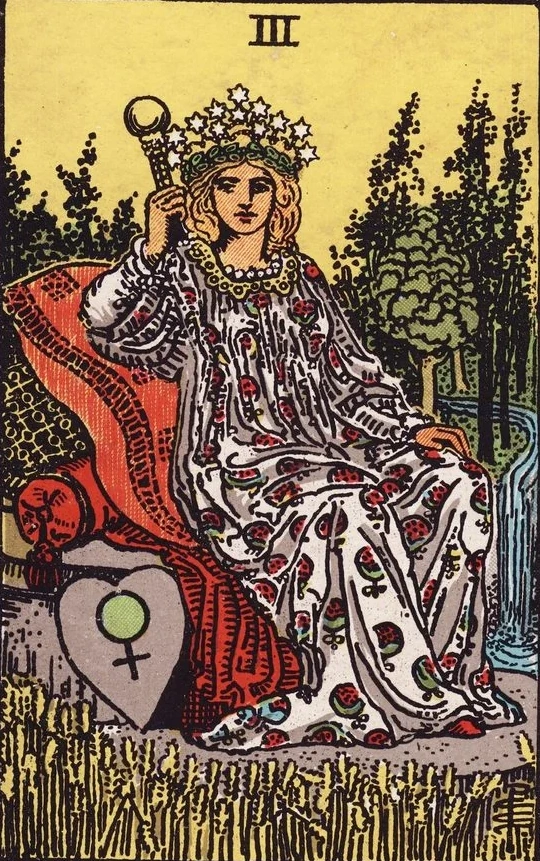
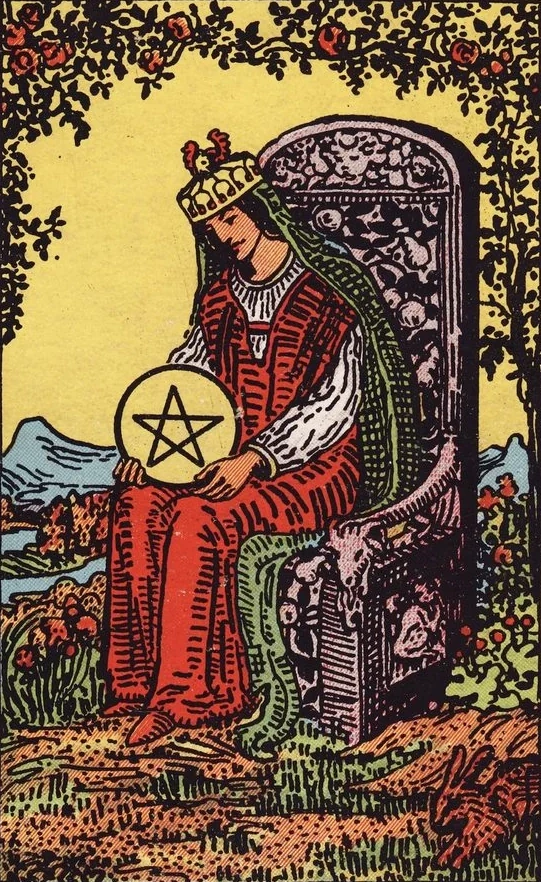
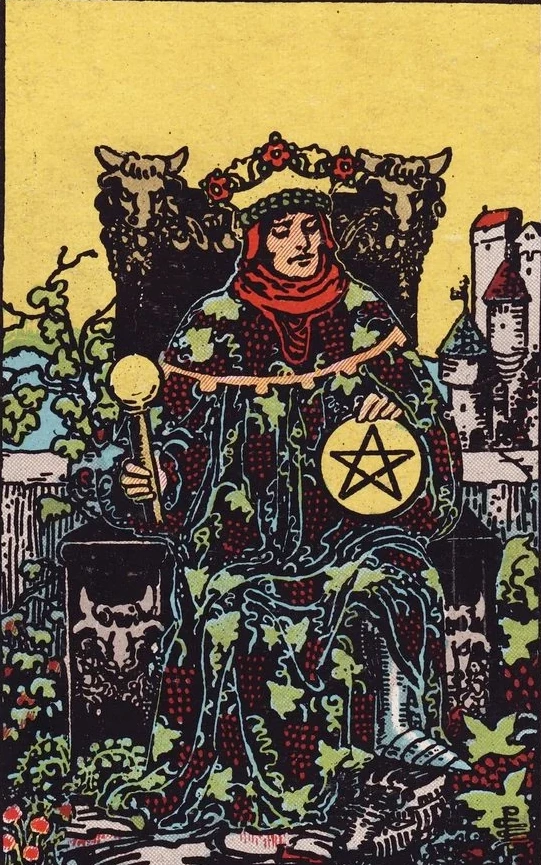
- Una figura majestuosa, sentada, con ricas vestiduras y aspecto real, como de una hija del cielo y de la tierra
- Su diadema es de doce estrellas, reunidas en un racimo
- El símbolo de Venus está en el escudo que descansa cerca de ella
- Un campo de trigo madura frente a ella, y más allá hay una caída de agua
- El cetro que lleva está coronado por el globo de este mundo
- Es el Jardín inferior del Edén, el Paraíso Terrenal, todo lo que simboliza la casa visible del hombre
- No es Regina coeli, pero sigue siendo refugium peccatorum, la madre fecunda de miles
- Hay también ciertos aspectos en los que se la ha descrito correctamente como el deseo y sus alas, como la mujer vestida de sol, como Gloria Mundi y el velo del Sanctum Sanctorum
- pero no es, puedo añadir, el alma que ha alcanzado alas, a menos que todo el simbolismo se cuente de otra manera y poco usual
- Es sobre todo fecundidad universal y el sentido externo de la Palabra
- Esto es obvio, porque no hay mensaje directo que se haya dado al hombre como el que lleva la mujer
- pero ella misma no lleva su interpretación
- En otro orden de ideas, la carta de la Emperatriz significa la puerta o portal por el que se obtiene entrada a esta vida, como al Jardín de Venus
- y entonces el camino que conduce fuera de allí, hacia lo que está más allá, es el secreto que conoce la Sacerdotisa: ella lo comunica a los elegidos
- La mayoría de las antiguas atribuciones de esta carta son completamente erróneas en el simbolismo, como, por ejemplo, su identificación con la Palabra, la Naturaleza Divina, la Tríada, etcétera
Descripción de la imagen de Waite
A stately figure, seated, having rich vestments and royal aspect, as of a daughter of heaven and earth. Her diadem is of twelve stars, gathered in a cluster. The symbol of Venus is on the shield which rests near her. A field of corn is ripening in front of her, and beyond there is a fall of water. The sceptre which she bears is surmounted by the globe of this world. She is the inferior Garden of Eden, the Earthly Paradise, all that is symbolized by the visible house of man. She is not Regina coeli, but she is still refugium peccatorum, the fruitful mother of thousands. There are also certain aspects in which she has been correctly described as desire and the wings thereof, as the woman clothed with the sun, as Gloria Mundi and the veil of the Sanctum Sanctorum; but she is not, I may add, the soul that has attained wings, unless all the symbolism is counted up another and unusual way. She is above all things universal fecundity and the outer sense of the Word. This is obvious, because there is no direct message which has been given to man like that which is borne by woman; but she does not herself carry its interpretation. In another order of ideas, the card of the Empress signifies the door or gate by which an entrance is obtained into this life, as into the Garden of Venus; and then the way which leads out therefrom, into that which is beyond, is the secret known to the High Priestess: it is communicated by her to the elect. Most old attributions of this card are completely wrong on the symbolism—as, for example, its identification with the Word, Divine Nature, the Triad, and so forth.