El Diablo
Arcanos mayores
Resumen de ARCANI
Al derecho
Devastación, violencia y fuerza; fatalidad, y lo que está predestinado pero no por ello es malo.
Palabras clave
- devastación
- violencia
- fuerza
- fatalidad
- predestinación
Invertida
Fatalidad maligna; debilidad, mezquindad y ceguera.
Palabras clave
- fatalidad maligna
- debilidad
- mezquindad
- ceguera
Notas de la imagen · Waite
Extractos de las descripciones de las imágenes de Waite, no interpretaciones adicionales de ARCANI.
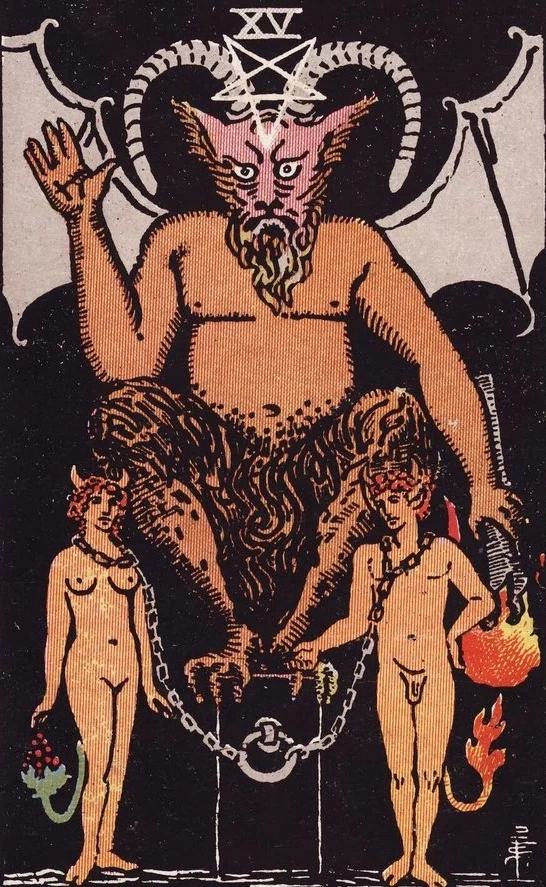
- El diseño es una acomodación, término medio o armonía, entre varios motivos mencionados en la primera parte
- El Macho Cabrío Cornudo de Mendes, con alas como las de un murciélago, está de pie sobre un altar
- En la boca del estómago está el signo de Mercurio
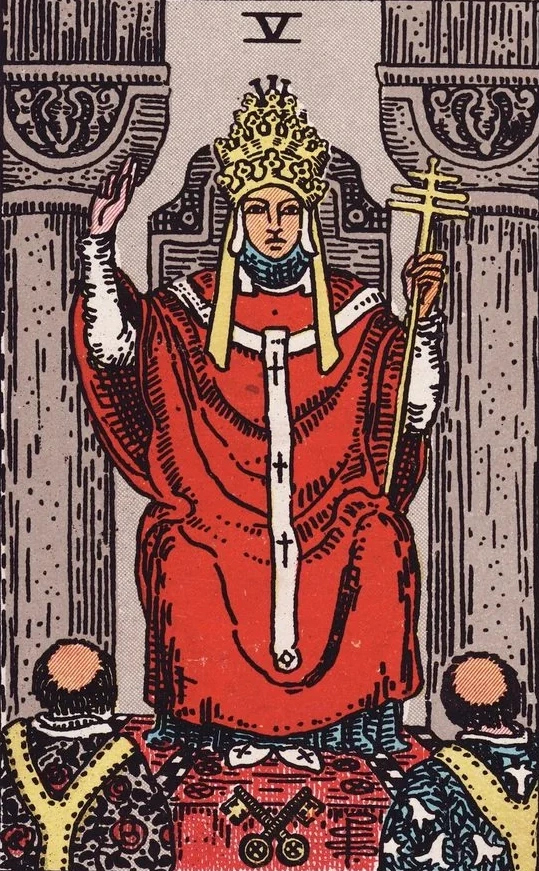
- La mano derecha está alzada y extendida, siendo lo inverso de aquella bendición que da el Sumo Sacerdote en la quinta carta
- En la mano izquierda hay una gran antorcha en llamas, invertida hacia la tierra
- Un pentagrama invertido está en la frente
- Hay un anillo delante del altar, del cual salen dos cadenas hasta los cuellos de dos figuras, una masculina y otra femenina
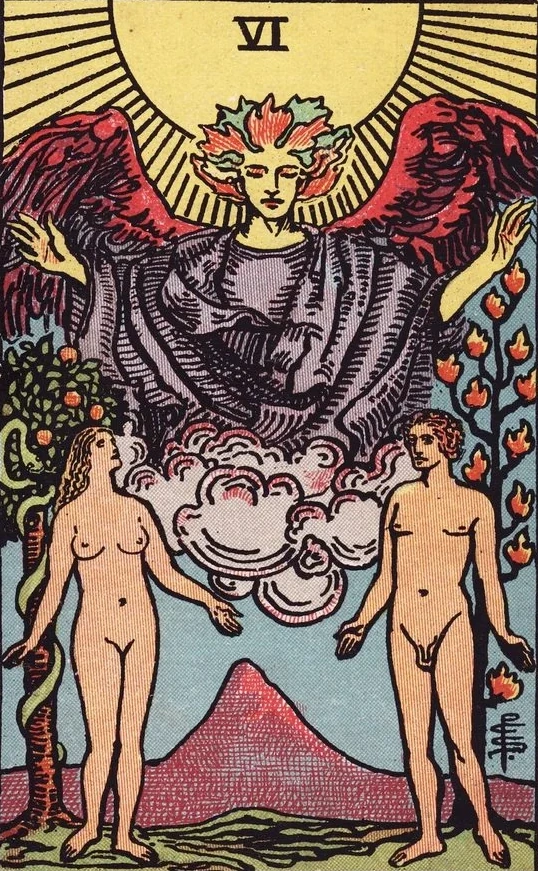
- Estas son análogas a las de la quinta carta, como si fueran Adán y Eva después de la Caída
- De esto forma parte la cadena y la fatalidad de la vida material
- Las figuras tienen cola, para significar la naturaleza animal, pero hay inteligencia humana en los rostros, y quien está exaltado por encima de ellas no ha de ser su amo para siempre
- Incluso ahora, él es también un esclavo, sostenido por el mal que hay en él y ciego a la libertad del servicio
- Con más desprecio que de costumbre por las artes que pretendía respetar e interpretar como maestro en ellas, Éliphas Lévi afirma que la figura bafomética es ciencia oculta y magia
- Otro comentarista dice que en el mundo Divino significa predestinación, pero no hay correspondencia en ese mundo con las cosas que abajo son propias del bruto
- Lo que sí significa es el Morador del Umbral fuera del Jardín Místico, cuando son expulsados de él quienes han comido el fruto prohibido
Descripción de la imagen de Waite
The design is an accommodation, mean or harmony, between several motives mentioned in the first part. The Horned Goat of Mendes, with wings like those of a bat, is standing on an altar. At the pit of the stomach there is the sign of Mercury. The right hand is upraised and extended, being the reverse of that benediction which is given by the Hierophant in the fifth card. In the left hand there is a great flaming torch, inverted towards the earth. A reversed pentagram is on the forehead. There is a ring in front of the altar, from which two chains are carried to the necks of two figures, male and female. These are analogous with those of the fifth card, as if Adam and Eve after the Fall. Hereof is the chain and fatality of the material life. The figures are tailed, to signify the animal nature, but there is human intelligence in the faces, and he who is exalted above them is not to be their master for ever. Even now, he is also a bondsman, sustained by the evil that is in him and blind to the liberty of service. With more than his usual derision for the arts which he pretended to respect and interpret as a master therein, Éliphas Lévi affirms that the Baphometic figure is occult science and magic. Another commentator says that in the Divine world it signifies predestination, but there is no correspondence in that world with the things which below are of the brute. What it does signify is the Dweller on the Threshold without the Mystical Garden when those are driven forth therefrom who have eaten the forbidden fruit.