La Torre
Arcanos mayores
Resumen de ARCANI
Al derecho
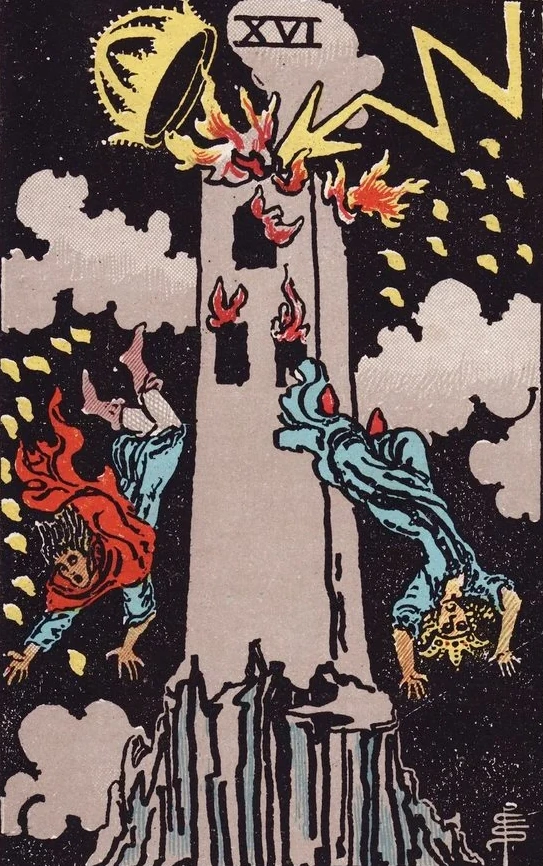
Miseria, angustia, adversidad, calamidad, desgracia, engaño y ruina; catástrofe imprevista.
Palabras clave
- miseria
- angustia
- calamidad
- desgracia
- engaño
- ruina
Invertida
Según otra lectura, lo mismo en menor grado; también opresión, encarcelamiento y tiranía.
Palabras clave
- opresión
- encarcelamiento
- tiranía
- calamidad atenuada
Notas de la imagen · Waite
Extractos de las descripciones de las imágenes de Waite, no interpretaciones adicionales de ARCANI.
- Las explicaciones ocultas que se han dado de esta carta son escasas y en su mayoría desconcertantes
- Es inútil señalar que representa la ruina en todos sus aspectos, porque lleva esa evidencia en la superficie
- Se dice además que contiene la primera alusión a un edificio material, pero no concibo que la Torre sea más o menos material que las columnas que hemos encontrado en tres casos anteriores
- No veo nada que justifique a Papus cuando supone que es literalmente la caída de Adán, pero hay más a favor de su alternativa: que significa la materialización de la palabra espiritual
- El bibliógrafo Christian imagina que es la caída de la mente que busca penetrar el misterio de Dios
- Estoy más bien de acuerdo con Grand Orient en que es la ruina de la Casa de la Vida, cuando el mal ha prevalecido en ella, y sobre todo en que es el desgarramiento de una Casa de Doctrina
- Entiendo, sin embargo, que la referencia es a una Casa de la Falsedad
- Ilustra también del modo más amplio la vieja verdad de que "si el Señor no edifica la casa, en vano trabajan los que la edifican". Hay un sentido en que la catástrofe es un reflejo de la carta anterior, pero no por el lado del simbolismo que he intentado indicar en ella
- Más correctamente se trata de una analogía
- una se ocupa de la caída en el estado material y animal, mientras que la otra significa la destrucción en el plano intelectual
- Se ha hablado de la Torre como el castigo del orgullo y del intelecto abrumado en el intento de penetrar el Misterio de Dios
- pero en ninguno de los dos casos estas explicaciones dan cuenta de las dos personas que son los sufrientes vivos
- Una es la palabra literal hecha vana y la otra su falsa interpretación
- En un sentido aún más profundo, puede significar también el fin de una dispensación, pero aquí no hay posibilidad de considerar esta cuestión tan compleja
Descripción de la imagen de Waite
Occult explanations attached to this card are meagre and mostly disconcerting. It is idle to indicate that it depicts ruin in all its aspects, because it bears this evidence on the surface. It is said further that it contains the first allusion to a material building, but I do not conceive that the Tower is more or less material than the pillars which we have met with in three previous cases. I see nothing to warrant Papus in supposing that it is literally the fall of Adam, but there is more in favour of his alternative—that it signifies the materialization of the spiritual word. The bibliographer Christian imagines that it is the downfall of the mind, seeking to penetrate the mystery of God. I agree rather with Grand Orient that it is the ruin of the House of Life, when evil has prevailed therein, and above all that it is the rending of a House of Doctrine. I understand that the reference is, however, to a House of Falsehood. It illustrates also in the most comprehensive way the old truth that "except the Lord build the house, they labour in vain that build it." There is a sense in which the catastrophe is a reflection from the previous card, but not on the side of the symbolism which I have tried to indicate therein. It is more correctly a question of analogy; one is concerned with the fall into the material and animal state, while the other signifies destruction on the intellectual side. The Tower has been spoken of as the chastisement of pride and the intellect overwhelmed in the attempt to penetrate the Mystery of God; but in neither case do these explanations account for the two persons who are the living sufferers. The one is the literal word made void and the other its false interpretation. In yet a deeper sense, it may signify also the end of a dispensation, but there is no possibility here for the consideration of this involved question.