La Luna
Arcanos mayores
Resumen de ARCANI
Al derecho
Enemigos ocultos y peligro; oscuridad, terror, engaño, fuerzas ocultas y error.
Palabras clave
- enemigos ocultos
- peligro
- oscuridad
- terror
- engaño
- error
Invertida
Inestabilidad e inconstancia; silencio, y engaño y error menores.
Palabras clave
- inestabilidad
- inconstancia
- silencio
- engaño menor
Notas de la imagen · Waite
Extractos de las descripciones de las imágenes de Waite, no interpretaciones adicionales de ARCANI.
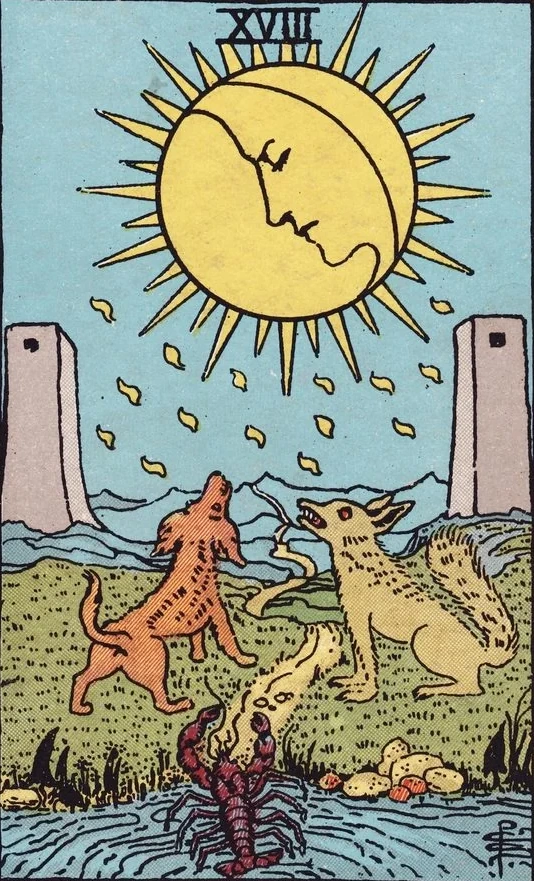
- La distinción entre esta carta y algunos de los tipos convencionales es que la luna está creciendo en lo que se llama el lado de la misericordia, a la derecha del observador
- Tiene dieciséis rayos principales y dieciséis secundarios
- La carta representa la vida de la imaginación aparte de la vida del espíritu
- El sendero entre las torres es la salida hacia lo desconocido
- El perro y el lobo son los miedos de la mente natural ante ese lugar de salida, cuando solo hay luz reflejada para guiarla
- La última referencia es una clave para otra forma de simbolismo
- La luz intelectual es un reflejo y más allá está el misterio desconocido que no puede mostrar
- Ilumina nuestra naturaleza animal, cuyos tipos se representan abajo: el perro, el lobo y lo que sube de las profundidades, la tendencia innombrable y horrible que es inferior a la bestia salvaje
- Se esfuerza por alcanzar la manifestación, simbolizada por el arrastrarse desde el abismo del agua hacia la tierra, pero por regla general se hunde de nuevo de donde vino
- El rostro de la mente dirige una mirada serena sobre la inquietud de abajo
- el rocío del pensamiento cae
- el mensaje es: Paz, quédate quieto
- y puede que sobrevenga una calma sobre la naturaleza animal, mientras el abismo de abajo deje de dar forma
Descripción de la imagen de Waite
The distinction between this card and some of the conventional types is that the moon is increasing on what is called the side of mercy, to the right of the observer. It has sixteen chief and sixteen secondary rays. The card represents life of the imagination apart from life of the spirit. The path between the towers is the issue into the unknown. The dog and wolf are the fears of the natural mind in the presence of that place of exit, when there is only reflected light to guide it. The last reference is a key to another form of symbolism. The intellectual light is a reflection and beyond it is the unknown mystery which it cannot shew forth. It illuminates our animal nature, types of which are represented below—the dog, the wolf and that which comes up out of the deeps, the nameless and hideous tendency which is lower than the savage beast. It strives to attain manifestation, symbolized by crawling from the abyss of water to the land, but as a rule it sinks back whence it came. The face of the mind directs a calm gaze upon the unrest below; the dew of thought falls; the message is: Peace, be still; and it may be that there shall come a calm upon the animal nature, while the abyss beneath shall cease from giving up a form.