Der Herrscher
Große Arkana
ARCANI-Zusammenfassung
Aufrecht
Stabilität, Macht und Schutz; Vernunft, Überzeugung, Autorität und Wille.
Schlüsselwörter
- Stabilität
- Macht
- Schutz
- Verwirklichung
- Vernunft
- Überzeugung
Umgekehrt
Wohlwollen und Ansehen; auch Verwirrung für Feinde, Behinderung und Unreife.
Schlüsselwörter
- Wohlwollen
- Mitgefühl
- Behinderung
- Unreife
Bildnotizen · Waite
Auszüge aus Waites Bildbeschreibungen, keine zusätzlichen Deutungen von ARCANI.
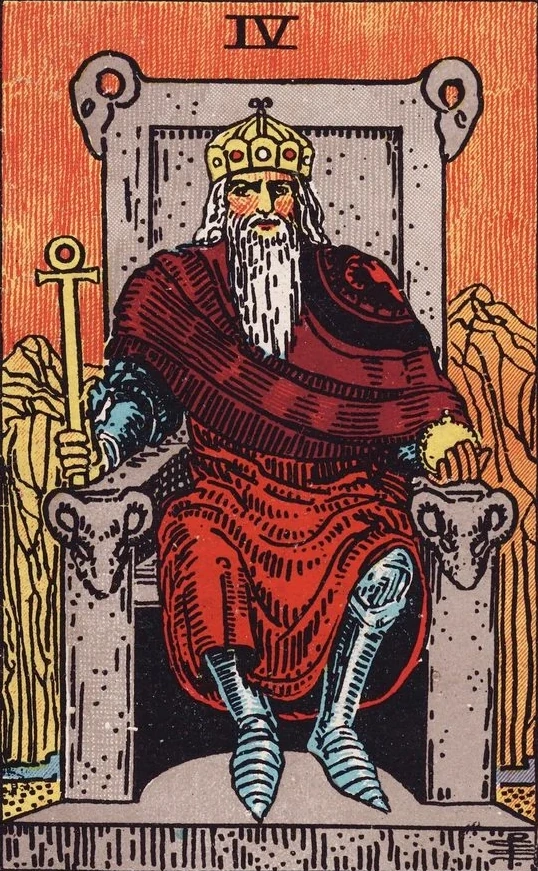
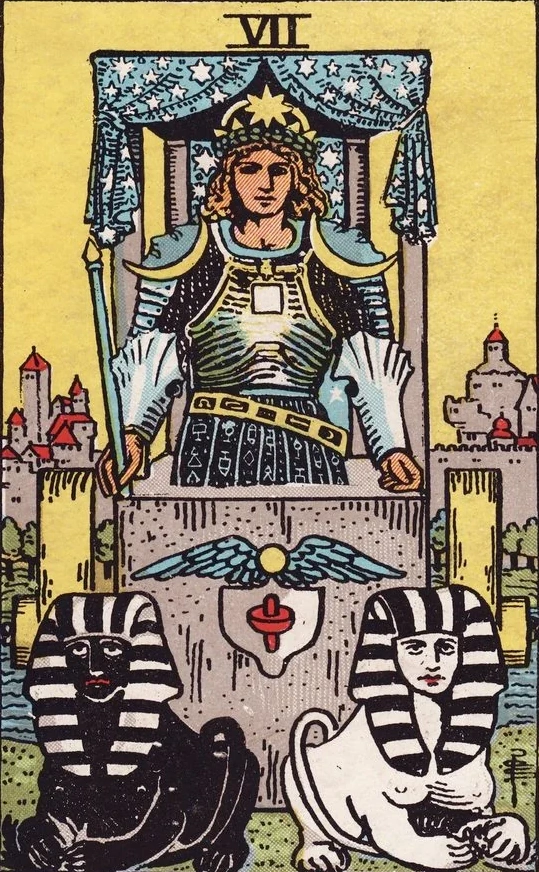
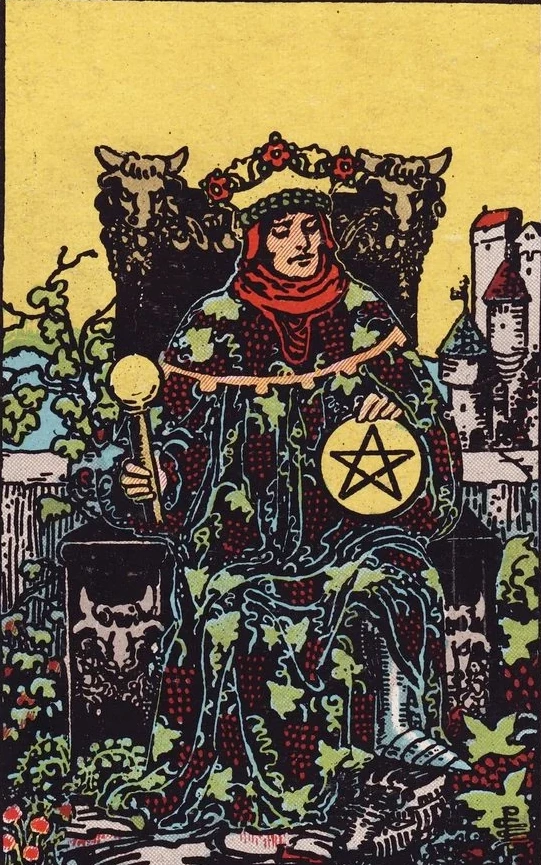
- Er hat eine Form des Crux ansata als Zepter und eine Kugel in der linken Hand
- Er ist ein gekrönter Monarch, gebietend, stattlich, auf einem Thron sitzend, dessen Armlehnen mit Widderköpfen versehen sind
- Er ist ausführende Kraft und Verwirklichung, die Macht dieser Welt, hier bekleidet mit den höchsten ihrer natürlichen Eigenschaften
- Er wird gelegentlich auf einem kubischen Stein sitzend dargestellt, was jedoch einige der Fragen verwirrt
- Er ist die männliche Kraft, auf die die Herrscherin antwortet, und in diesem Sinn ist er der, der den Schleier der Isis zu lüften sucht
- doch sie bleibt virgo intacta
- Es sollte verstanden werden, dass diese Karte und die der Herrscherin nicht genau den Zustand des Ehelebens darstellen, obwohl dieser Zustand mitgemeint ist
- An der Oberfläche, wie ich angedeutet habe, stehen sie für weltliche Königswürde, erhoben auf die Sitze der Mächtigen
- doch darüber hinaus gibt es die Andeutung einer anderen Gegenwart
- Sie bedeuten auch, und die männliche Figur besonders, die höhere Königsherrschaft, die den intellektuellen Thron einnimmt
- Hierin liegt die Herrschaft des Gedankens eher als der Tierwelt
- Beide Persönlichkeiten sind auf ihre eigene Weise "voller seltsamer Erfahrung", doch ihre Weisheit ist nicht bewusst die, die aus einer höheren Welt schöpft
- Der Herrscher wurde beschrieben als (a) Wille in verkörperter Form, doch dies ist nur eine seiner Anwendungen, und (b) als Ausdruck von Virtualitäten, die im Absoluten Sein enthalten sind, doch dies ist Fantasie
Waites Beschreibung des Bildes
He has a form of the Crux ansata for his sceptre and a globe in his left hand. He is a crowned monarch—commanding, stately, seated on a throne, the arms of which are fronted by rams' heads. He is executive and realization, the power of this world, here clothed with the highest of its natural attributes. He is occasionally represented as seated on a cubic stone, which, however, confuses some of the issues. He is the virile power, to which the Empress responds, and in this sense is he who seeks to remove the Veil of Isis; yet she remains virgo intacta. It should be understood that this card and that of the Empress do not precisely represent the condition of married life, though this state is implied. On the surface, as I have indicated, they stand for mundane royalty, uplifted on the seats of the mighty; but above this there is the suggestion of another presence. They signify also—and the male figure especially—the higher kingship, occupying the intellectual throne. Hereof is the lordship of thought rather than of the animal world. Both personalities, after their own manner, are "full of strange experience," but theirs is not consciously the wisdom which draws from a higher world. The Emperor has been described as (a) will in its embodied form, but this is only one of its applications, and (b) as an expression of virtualities contained in the Absolute Being—but this is fantasy.